Why Your Eyes Need You To Drink Coffee
July 24, 2011 by admin
Filed under Coffee School
We live in a visual society. Sight is a blessing. However, the overuse of sight is draining. The average person spends a good portion of their day on the computer. These very same people come home to watch TV or connect with others through social networking.
Shew. Poor eyes.
Some of us are so visually dependent, that we don’t even notice our own breath. Heck, we don’t even know if we are hungry or dehydrated … as long as our eyes are being stimulated, we forget we have ears, and lungs, and toes, and a nose, a tongue ….
So what does this have to do with coffee?
Everything!
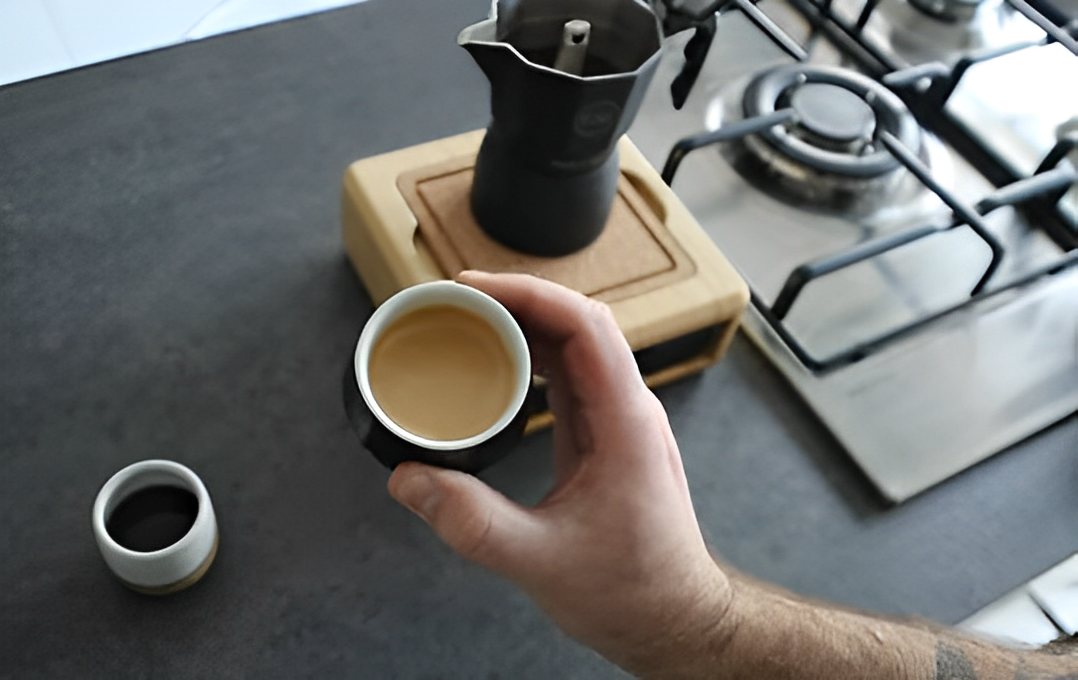
Coffee uses all the other senses. And thank god, sight is not required. Allow your eyes a nice break and make yourself a cup of coffee.
People that don’t even drink coffee, at least enjoy the aroma of freshly ground beans. What life that smell brings back to our body. Our nose is there for important reasons. Our sense of smell is under-stimulated, so we assume to smell the world is not important. We have convinced ourselves it is a waste of time. In doing this we have killed part of our world, an important part of our existence.
How many times have you stuffed food in your mouth while watching your favorite show? Did you even taste your food? Did you even recognize when you were full? Taste is an enjoyable sensation. That is why we love good coffee. We love the warm liquid on our tongue … we love the bitter, the sweet. We love the communication between coffee and tongue. How refreshing to turn off the mind, the eyes and taste life.
And let’s not forget about our ears. You know you love the sound of water draining through your coffee grounds … the silky song of freshly brewed coffee being poured into your favorite mug. And then, the feel, the sense of touch, of the warm coffee cup in your hands.
Wow, what a world coffee opens up to us!
What Your Body Knows
July 19, 2011 by admin
Filed under Coffee School
There is so much to fit into every day: Work, exercise, loved-ones, self, food, and coffee of course. That’s why:
“Everything in moderation, including moderation.”
Better yet, “Be moderate in order to taste the joys of life in abundance.”
~Epicurus
I love to drink coffee while I’m working. I love my job, so I get lost in the work … and in the coffee drinking. Before I know it, hours have passed without a morsel of food or fresh drinking water.
Coffee suppresses the appetite, but that doesn’t mean that it suppresses the need for nourishment. Whether or not you think you are hungry, your body knows you are.
Just a friendly reminder: The best way for you to enjoy your coffee, is to keep your body healthy. Fit in everything you need for a healthy, enjoyable life everyday!
Stove Top Coffee Percolator
July 4, 2011 by admin
Filed under Coffee Makers
Interested in purchasing a stove top coffee percolator? Well, here are a few percolator tidbits to help you along with your decision. We will also give you a link to a stove top coffee percolator expert. Be sure to also check out the instructional video below.
- Remember: A stove top coffee percolator does not make instant coffee. Invest in good quality coffee that is freshly ground to coarse. And give yourself time to make your coffee, no need to rush!
- You will not need a paper coffee filter for your percolator. You will reuse the filter basket provided with the pot. This is a great convenience. No more wasting money on disposable filters or filling up the landfills with them.
- Use good quality water. Filter your water if necessary. Start out with cool water, never hot. Once it receives enough heat from the stove, the water will form bubbles and move up the percolator stem. It will then seep through the coffee grounds and continue the cycle. You will hear the percolator perking.
- Remember your coffee-making basics. Do the right measurements with water and coffee grounds.
- When you place your stove top coffee percolator on the stove top, making sure all the components are securely in their proper place, turn the stove top to medium heat. You don’t want to burn your coffee and this may take some practice. But only because you are starting something new. Using a stove top coffee percolator is not at all difficult.
- When your coffee is brewed to your liking (please check out the amazing The Quaker Kitchen to get detailed information on just how long to brew your coffee.) take it off the stove top. Use an over mitt because the pot and lid are all hot! Also be careful of steam. Using a stove top coffee percolator is not dangerous, you just have to take sensible precautions.
- Be certain to keep your stove top coffee percolator clean. Just wash like you would any of your dishes with a mild detergent and sponge. Keeping your coffee percolator free of coffee residue is going to keep that cup of joe fresh and tasty!
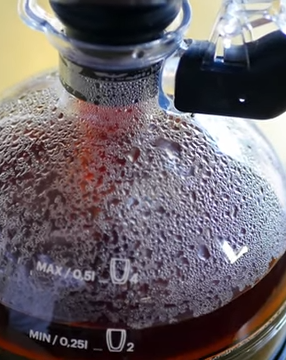
- Using a glass stove top coffee percolator can also be fun. You watch the water brew right before your eyes. It is fun to look forward to that coffee while watching the water become darker and darker with that delectable taste.
Do you use a stove top coffee percolator? Please leave a comment below. Our readers would love to read any helpful advice. Let us know what your favorite percolator brands. Also share what kind of coffee tastes best to you in a percolator.
The best step-by-step video I have come across for making the perfect cup with a stove top coffee percolator comes from The Quaker Kitchen.
Caffeine, Health, Literature, and a Longing for the Sacred
July 25, 2010 by admin
Filed under Coffee School
The Great Connection Between Literature and Caffeine
So, we all remember the great German novelist, poet, playwright and scientist Johann Wolfgang von Goethe, right? Well, believe or not, he had a hand in the discovery of caffeine. In The 100 Most Important Chemical Compounds (p. 56), Myers discusses this discovery.
On one fateful day, Goethe visited a lab where Runge (a German chemist and physician) was working. After witnessing Runge dilate the eye of a cat with a substance he removed from a nightshade plant, “Goethe awarded Runge with a sample of rare coffee beans and challenged him to determine the compound that gave coffee its stimulating effects. After several months, Runge isolated caffeine from coffee in 1819.”
Caffeine has Quite the Family
Caffeine is an alkaloid. Alkaloids occur in nature in both plants and animals. Cocaine, morphine, and caffeine are all examples of alkaloids. The color, of most alkaloids, is white and the taste is bitter, as is with the alkaloid caffeine. As stated in The World of Caffeine (p. xx), “Many alkaloids present a double face, exhibiting both poisonous and curative properties.” It then comes as no surprise that coffee, in the early days, was used as a medicine.
What Caffeine Really Does
In An Orchard Invisible (p. 161), Silvertown tells us what caffeine really does. In our body, there is a natural substance that builds up in us throughout the day causing us to relax. This natural substance is called adenosine and it eventually puts us to bed. I sum up the process like this: caffeine is like a bouncer who won’t let adenosine in the club. Inside the club is the central nervous system, and caffeine isn’t going to let adenosine in to ruin the party. Caffeine keeps the club (nervous system) nice and hype. Well, for while anyway. Caffeine does not stay in the body for long.
Caffeine and Your Heart: Literally & Figuratively
As stated above, caffeine does stimulate the nervous system but it does not stay in the body for long. It does raise blood pressure, but as stated in an article entitled “The Caffeine Advantage” in Men’s Health, those who drink coffee on a regular basis have half the chance of dying from heart failure as non-coffee drinkers. The article also says, according to Harvard researchers, there are some advantages to drinking caffeinated coffee in regards to preventing Parkinson’s disease as well as diabetes. Just lay off the sugar and take care if you are someone who is sensitive to caffeine or has high blood pressure
I have to admit that my favorite discussion on the benefits of caffeine came to me from Stairways to Heaven (p. 136) which states that “coffee has a ritual element” and finishes that thought with these wonderful words:
This ritual element helps lift persons out of their workaday mind-sets and prepares them to embrace the “finer” things in life. The physiological effects of caffeine consumption, no less than the set or setting, also help produce a Zen-like “fresh way of seeing things.” Enhanced mental alertness and increased sensory alertness combine to help us appreciate new dimensions or an added richness to what are otherwise ordinary experiences. Few Americans consume coffee in social or ritual contexts that might transform their experiences into one of quite the same spiritual magnitude as Zen Buddhism’s satori. Yet by the hundreds of thousands they have found coffee drinking to be crucial to such spiritual activities as flowing conversation, intimate readings, and intellectual discovery. And in this sense these Americans have found that coffee, in a matter at least approximating Zen satori, is capable of awakening them to the fact that the sacred (i.e., what is precious, truly important, intrinsically worthwhile) is in the here and now of everyday life if we can but learn to see it.
And I think that sums up an article about caffeine in a way I could never even attempt.
So, go forth and enjoy your coffee.
Reference List
Bealer, B & Weinberg, B 2001, The World of Caffeine: The Science and Culture of the World’s Most Popular Drug, Routledge, NY, p. xx.
Myers, R 2007, One Hundred Most Important Chemical Compounds, Greenwood Press, CT, p. 56.
Fuller, R 2000, Stairways to Heaven: Drugs in American Religious History, Westview Press, Colorado, p 136.
Griffin, L March 2008, ‘The Caffeine Advantage,’ Men’s Health, pp. 102-104.
Silvertown, J 2009, An Orchard Invisible: A Natural History of Seeds, The University of Chicago Press, Chicago, p. 161.
Drink Coffee. Change the World.
July 12, 2010 by admin
Filed under Coffee School
Looking to make a difference while indulging in your favorite pastime? Try buying your next cup of joe from one of these great nonprofit organizations:
- Three Avocados – A Nonprofit Coffee Company: Three Avocados reinvests the profits made from selling coffee into clean drinking water, education, and other community services for the developing countries who produced the coffee. You can order online or make a donation.
- Aspire Coffeeworks – Great Coffee Doing Good: Aspire CoffeeWorks not only creates quality craft-roasted coffees, but they also create jobs for people with developmental disabilities. This is a win-win situation. You get a fantastic cup of coffee and people with disabilities are given the chance to reach new heights and make their dreams come true. Order your coffee online now, and while you’re at it, buy a shirt and a few coffee mugs too!
Land of a Thousand Hill Coffee Company – Drink Coffee. Do Good: Just watch Drink Coffee. Do Good. You will instantly be inspired to do more.
Enjoy your life, enjoy your coffee and enjoy doing good!